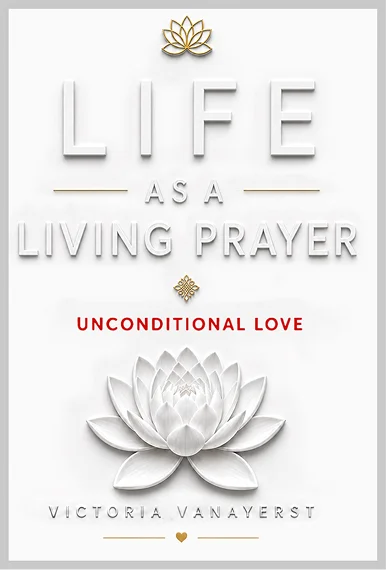
LIFE AS A LIVING PRAYER
UNCONDITIONAL LOVE
10-POINT OVERVIEW
Life as a Living Prayer — Unconditional Love as a conscious way of living rather than simply an emotion. How to practice unconditional love. Love as a way of being, living with compassion, unconditional love and boundaries, spiritual love, conscious relationships. The book contrasts conditional love—love based on approval, expectations, performance, and what we receive—with a more mature love rooted in acceptance, compassion, dignity, freedom, and understanding. Its central framework, “Love 2.0,” describes an inner upgrade from fear to love, judgment to compassion, blame to responsibility, control to respect, and separation to connection.
The journey begins within. The book asks readers to examine inherited beliefs, emotional wounds, fear, self-judgment, and the need for approval, then replace these patterns with self-awareness, emotional intelligence, forgiveness, authenticity, self-trust, and self-acceptance. Unconditional love is not presented as passivity or perfection. It requires accountability, courage, and the willingness to recognize one’s own worth while continuing to learn, heal, and grow.
The same principles are then brought into relationships. Love becomes a daily practice expressed through trust, respect, emotional safety, empathy, compassionate communication, patience, gratitude, healthy boundaries, and the ability to navigate disagreement without dehumanizing one another. The book emphasizes that boundaries and unconditional love belong together: healthy love can care deeply for another person without self-abandonment, control, enabling, or the surrender of personal dignity.
Ultimately, the book expands love from an individual and relational practice into a way of contributing to the world. Service, kindness, conscious action, and personal example create a ripple effect that can strengthen families, relationships, communities, and humanity. The final invitation is not merely to understand unconditional love intellectually, but to embody it—to become a source of light, hope, belonging, compassion, and healing, choosing love again and again throughout the lifelong journey.
1. Love 2.0: Upgrading from Fear to Love
The book introduces “Love 2.0” as a new emotional and spiritual operating system. It invites readers to move beyond fear, judgment, blame, control, and conditional acceptance toward compassion, responsibility, trust, connection, and unconditional love.
2. Understanding Unconditional Love
Unconditional love is presented as love that recognizes inherent human worth without making love dependent upon performance, approval, agreement, success, or perfection. It does not mean approving of every behavior; it means preserving dignity and humanity even when circumstances are difficult.
3. Self-Love, Acceptance, and Authenticity
A major foundation of the book is learning to stop abandoning or reshaping oneself in order to earn acceptance. Self-love includes accepting imperfections, releasing destructive self-judgment, honoring one’s authentic self, and understanding that growth and self-acceptance can exist together.
4. Healing the Past Through Responsibility and Forgiveness
The book encourages readers to examine childhood wounds, emotional triggers, fear, shame, resentment, and limiting beliefs. Healing grows when blame is replaced by personal responsibility, when the past is approached with awareness, and when forgiveness creates space for greater emotional freedom.
5. Emotional Intelligence, Compassion, and Empathy
Love is described not only as a feeling but also as a skill that can be developed. Emotional intelligence teaches us to pause, understand our emotions, listen before reacting, and become curious rather than judgmental. Compassion and empathy allow us to recognize the humanity and unseen struggles in ourselves and others.
6. Trust, Respect, and Emotional Safety
Healthy love requires a strong relational foundation. Trust is built through consistent words and actions, respect honors the dignity and individuality of another person, and emotional safety creates the environment in which honesty, vulnerability, authenticity, and meaningful connection can flourish.
7. Healthy Boundaries Are Part of Love
The book makes a clear distinction between unconditional love and self-sacrifice. Boundaries protect emotional well-being, preserve self-respect, and prevent love from becoming enabling or resentful. Mature love can say, “I care about you, and I care about myself.”
8. Relationships Become a Daily Practice of Love
Enduring relationships are built intentionally through communication, listening, patience, gratitude, forgiveness, shared responsibility, mutual respect, and conscious effort. Love is sustained not by feelings alone, but by repeated choices and practices that help people repair, adapt, grow, and face challenges together.
9. Love in Action: Service, Contribution, and Example
Unconditional love reaches beyond private feeling and becomes action. Service, kindness, generosity, presence, and contribution allow love to touch other lives. The book emphasizes that people are often changed more by the example we live than by the ideas we speak.
10. Becoming Love and Creating a Legacy
The final movement of the book is from seeking love to embodying it. A meaningful legacy is measured not primarily by possessions, status, or recognition, but by lives touched, hearts opened, healing created, and love shared. The lifelong invitation is to remain open-hearted and repeatedly choose awareness, compassion, responsibility, connection, and love.